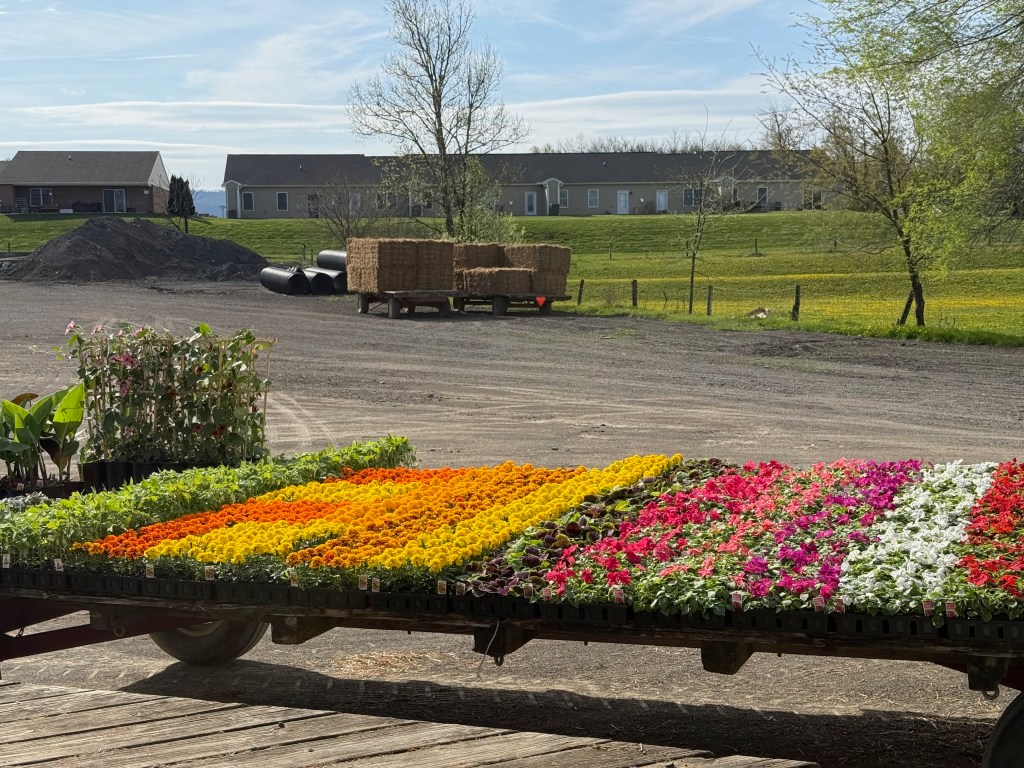
The first time I went to a plant auction, I had no idea what to expect.
My cousin had been there before and told me how much she enjoyed it. She was right about it being fun, but I was completely overwhelmed when I first arrived. I hadn’t realized how large it would be—or how crowded and noisy.
There were people everywhere, plants arranged in long numbered rows, wagons filled with flowers, and auctioneers calling bids above all the activity. It took me a little while to understand what was happening, but once I did, I was hooked.
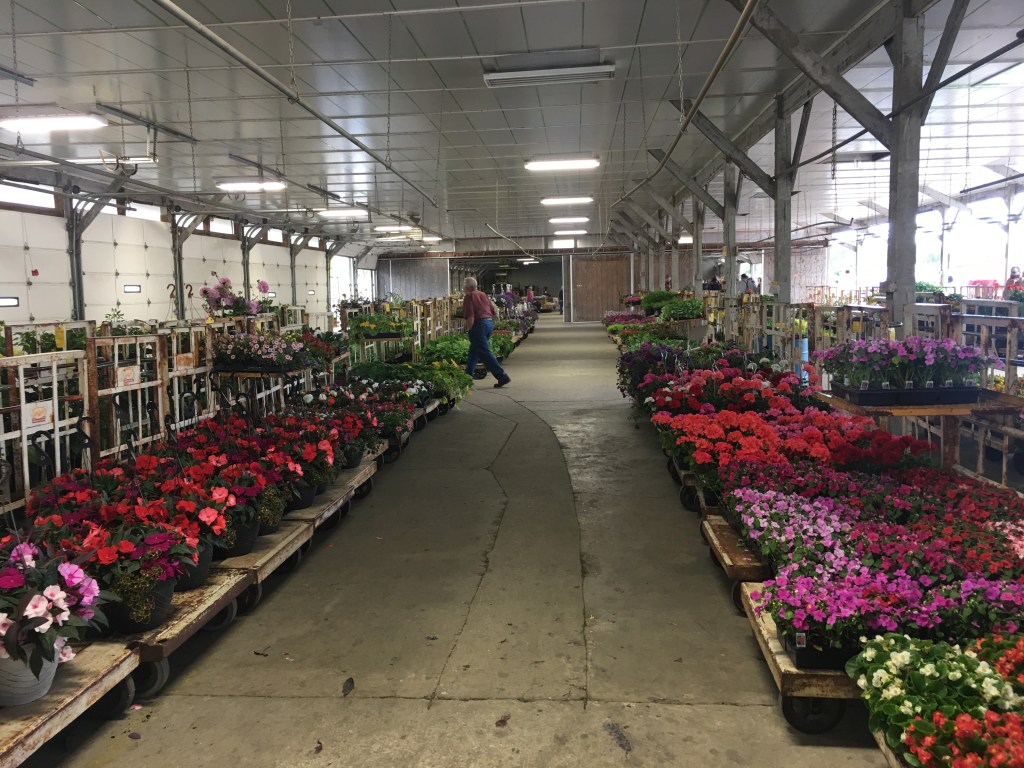
At the time, I had a small booth at a farmers market where I sold antiques, collectibles, and some of my handmade items. I began going to the plant auction to buy flowers to add to my booth. In the spring and fall, I sold seasonal plants and flowers. When autumn arrived, I added pumpkins too.
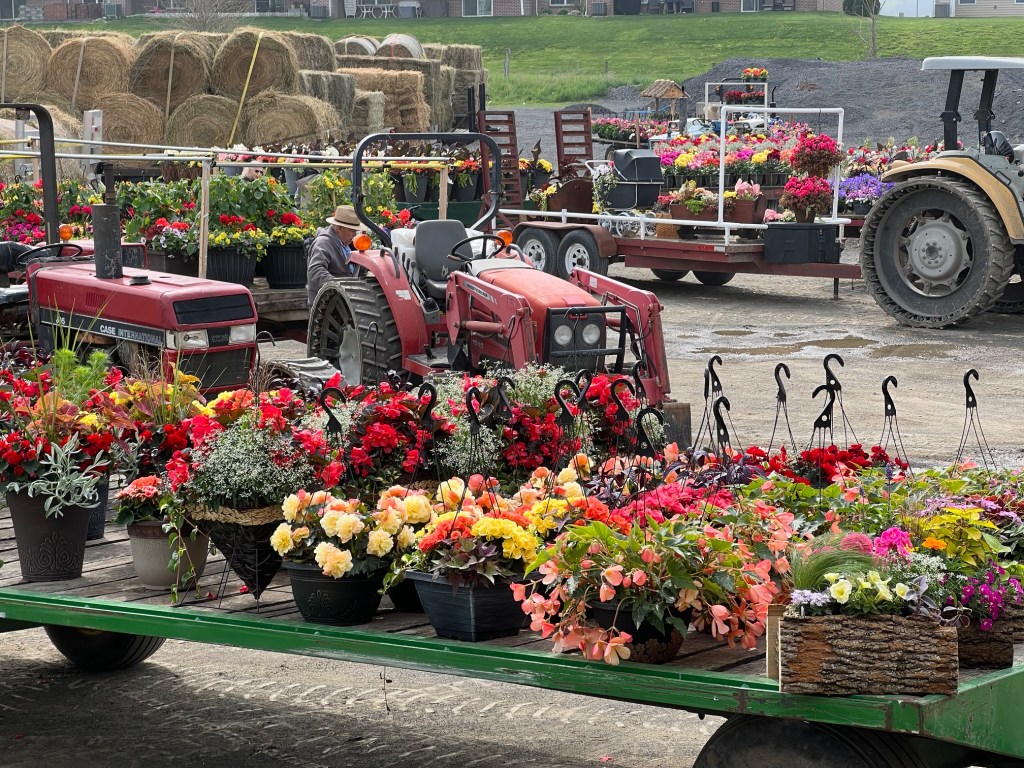
The auction offered an enormous selection—much more than I could ever find in one garden center. There were hanging baskets, individual pots, flats of flowers, large combination planters, and wagons overflowing with color.
Most of the plants were arranged in numbered rows. Other plants arrived on large wagons and carts. Each cart had a tag from the grower identifying the plants and stating how many pots or flats were included.
That number is very important.
At this auction, you are often bidding by the piece, but you are buying the entire group. The auctioneer might announce that there are 20 pots on a cart. If your winning bid is $5, you have not purchased all 20 pots for $5. You have purchased 20 pots at $5 each, for a total of $100.
New bidders do not always understand that—or they may miss what the auctioneer says in all the noise and excitement. It pays to listen carefully, read the grower’s tag, and do a little quick math before raising your bidder number.
My cousin and I developed our own bidding system, although not before making one funny mistake.
One day, we accidentally began bidding against each other. Neither of us realized that we were raising the price on the other. Fortunately, the auctioneer knew we were together. He stopped and asked if we knew we were both bidding.
We didn’t.
One of us quickly dropped out. After that, we talked briefly before the bidding began and agreed on how high we were willing to go. Only one of us would bid while the other continued looking at the plants coming up for auction. It was a much better system—and considerably less expensive than competing with each other.
Of course, knowing when to stop is part of the strategy.
Some of the larger local greenhouses send buyers to the auction. I can usually identify them because they wear shirts bearing the name or logo of the greenhouse. I learned to watch them bid. When the professional buyers stop, I know the price is probably getting too high.
The interesting thing is that I can buy the same flowers they are purchasing for their stores simply by placing my own bid. The difference is that I must be prepared to buy the entire quantity.
Sometimes that requires a moment of serious reflection.
Do I like these flowers?
Is the price right?
Where will I put them?
And, most importantly, do I really need all of them?
Once, my cousin and I bought so many plants that we couldn’t fit everything into our car. We tried, but there was simply no possible arrangement that would make it all fit. We finally had to call a friend with a pickup truck and ask him to come help us.
That should probably have taught us to buy less. I’m not sure that it did.
One of my more unusual purchases was a straw horse. We displayed it in front of the farmers market, where it made a wonderful seasonal decoration and helped draw attention to the market.
Although I no longer have my booth, I still go to the plant auction—just not as often. Now I buy flowers for my own home and sometimes for my neighbors.
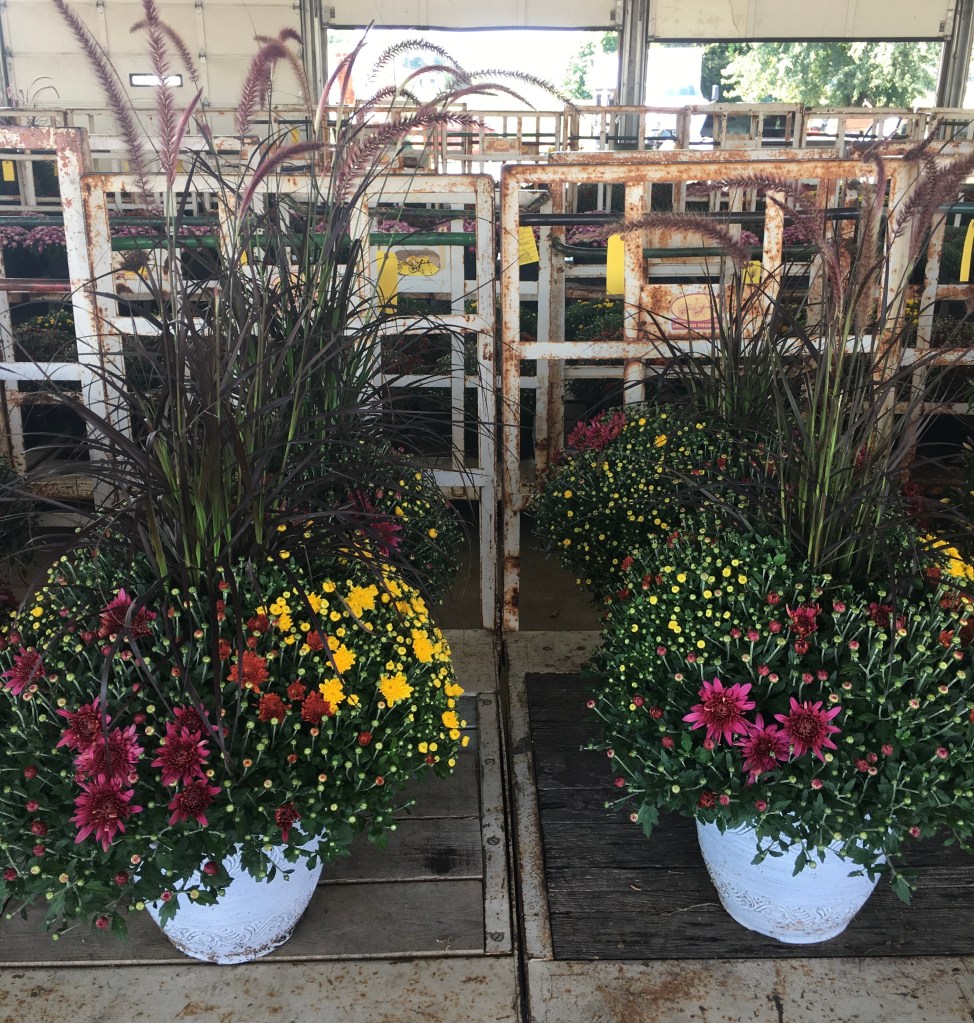
A former neighbor admired the large planters I placed on either side of my garage and asked me to find similar ones for her. Her home had a different color of brick, so I kept that in mind while choosing. Our planters were similar in style, but the colors were different so that each pair complemented its own setting.
Every so often, I find such a good deal on a cart of flowers that I buy them and take the extras to sell. I once sold flowers at my yard sale, and they were a big hit. Apparently, people who come looking for secondhand treasures are also happy to go home with a beautiful plant.
I continue returning to the auction for the enormous selection, the excitement of bidding, and the familiar faces I have come to recognize. There is always something new to see, and no two auction days are quite the same.
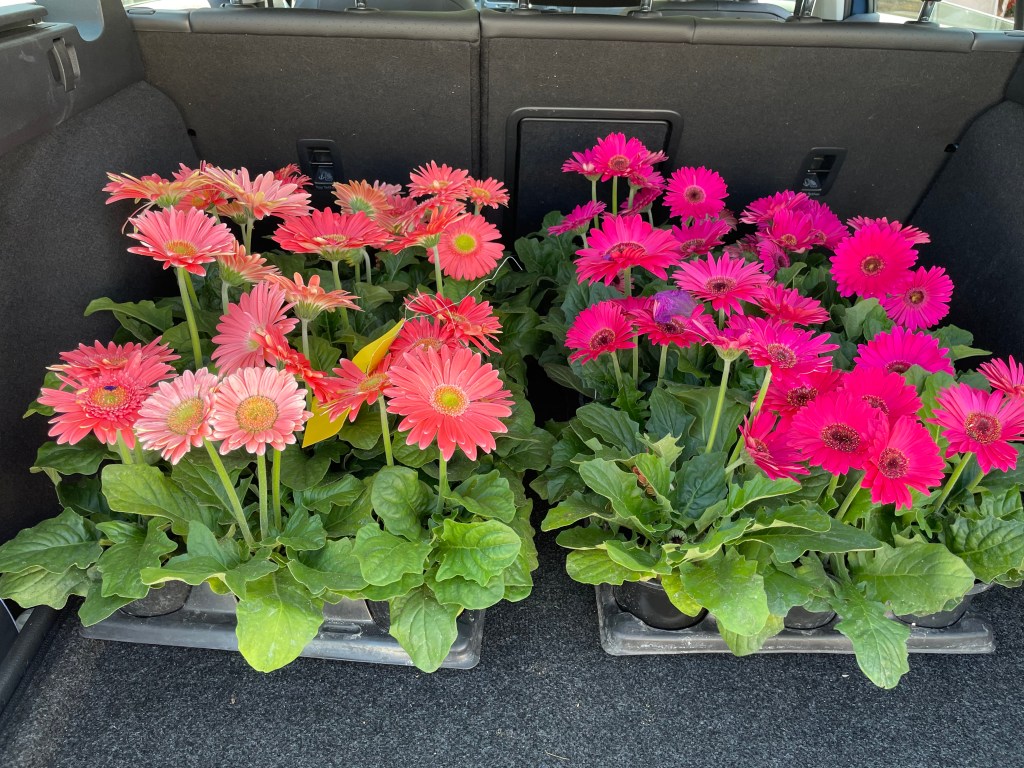
But no matter how experienced I become, every cart still requires a little strategy.
Do I really need 20 pots of Gerbera daisies?
Sometimes, I do.




Leave a comment