Choosing a Puzzle
The picture is always the first thing that catches my attention. I want a subject that I’ll enjoy looking at for several days while I work on it. Color, detail and interesting patterns all make a difference.
After the subject matter, I look at the brand. Over the years, I’ve found that there are certain brands I especially enjoy, including Cobble Hill, White Mountain and Ravensburger.
I prefer puzzles with a matte finish rather than a shiny one, and I like pieces that fit together securely. There is nothing quite as satisfying as finding the right piece and feeling it settle perfectly into place.
For me, 1,000 pieces seems to be just right. It gives me the challenge I’m looking for without becoming overwhelming, and usually gives me something to work on for several days.
Getting Started
I always begin with the border. I separate out the edge pieces and put the outside of the puzzle together first. Having that frame in place gives me a starting point for everything else.
Then I begin sorting. I group pieces by color and pattern, and I also pull out any pieces that have words or lettering on them. Depending on the puzzle, I may end up with quite a few different groups.
Over time, I’ve found that having a good system for sorting the pieces makes the whole process much more enjoyable.
My Puzzle Setup
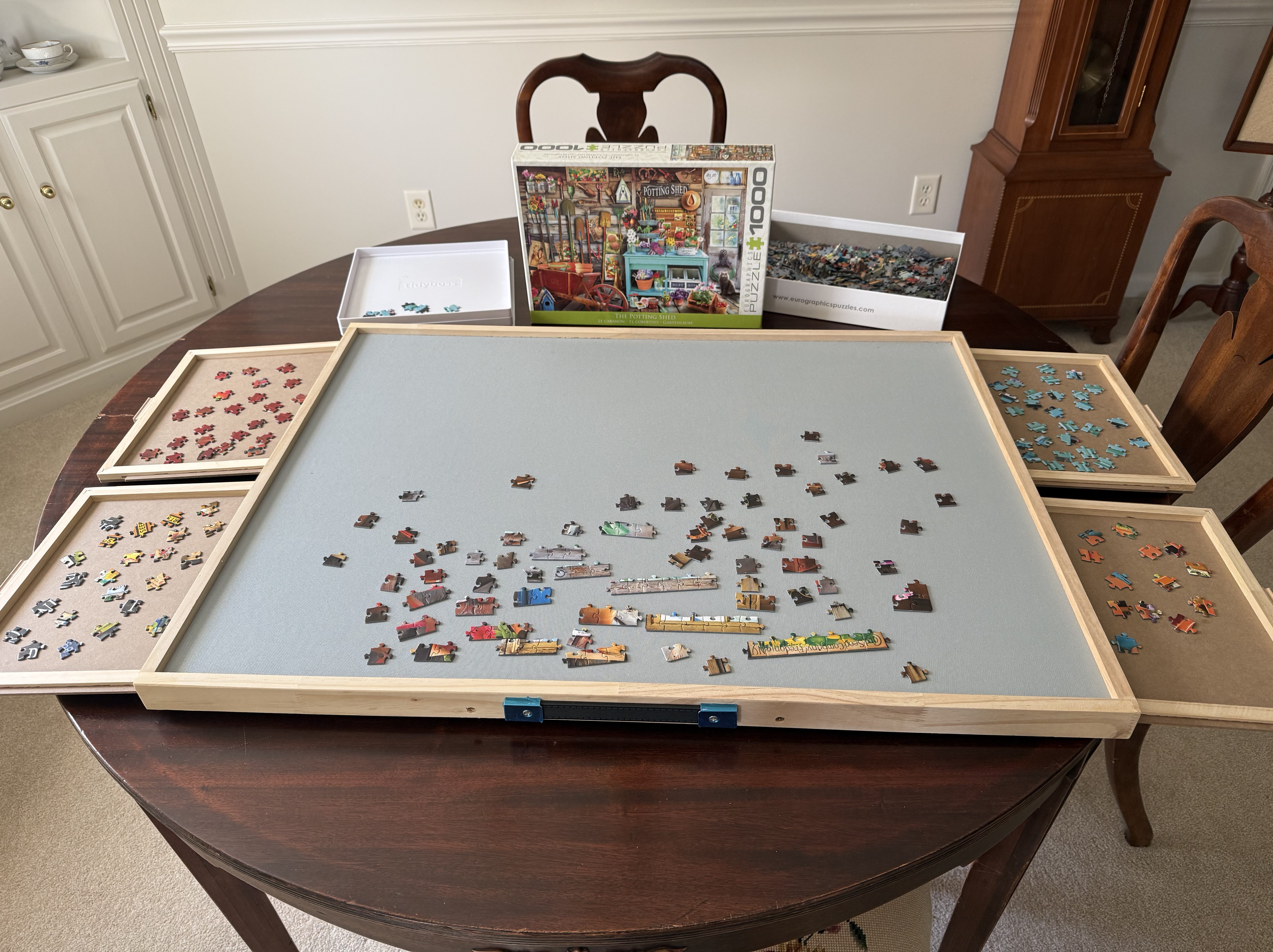
One of the best changes I made to my puzzle setup was buying a puzzle board that rotates and can also be propped up at an angle. I still find myself leaning over the puzzle sometimes, but not nearly as much as I used to. The angled surface makes working on a puzzle much more comfortable.
The surface of the board also helps hold the pieces in place. Even when the board is tilted, I don’t have pieces sliding everywhere.
The board has four built-in drawers for sorting pieces, and I use all of them. But I quickly discovered that four drawers weren’t enough for me.
A Place for All Those Pieces
The four drawers are useful, but when I’m working on a 1,000-piece puzzle, I usually want more ways to separate the pieces. I like being able to sort by colors, patterns, lettering and other distinctive details that might help me find what I need later.
So I added a set of separate puzzle sorting trays. Mine came as a set of eight, and I use them along with the drawers in the puzzle board. It may look like a lot of sorting, but having everything separated makes it much easier for me to concentrate on one area at a time.
Why I Enjoy the Process
There is something very satisfying about finding a piece you’ve been looking for and feeling it fit perfectly into place. Sometimes it’s the shape that gives it away. Other times it’s a tiny bit of color or texture that suddenly makes sense.
I find puzzling relaxing, too. If I can’t sleep, I can sit down and work on a puzzle for a while. During the day, it gives me something enjoyable to do that also feels productive.
I think of puzzles as a kind of art. Not in the classical sense, but because so much of puzzling involves really looking—at shapes, colors, patterns and textures. I also like the way it makes me think about how shapes relate to one another and exercises my spatial perception.
I usually puzzle alone, although when friends come to visit, I encourage them to put in a few pieces.
Most of them don’t.
What Happens When I Finish?
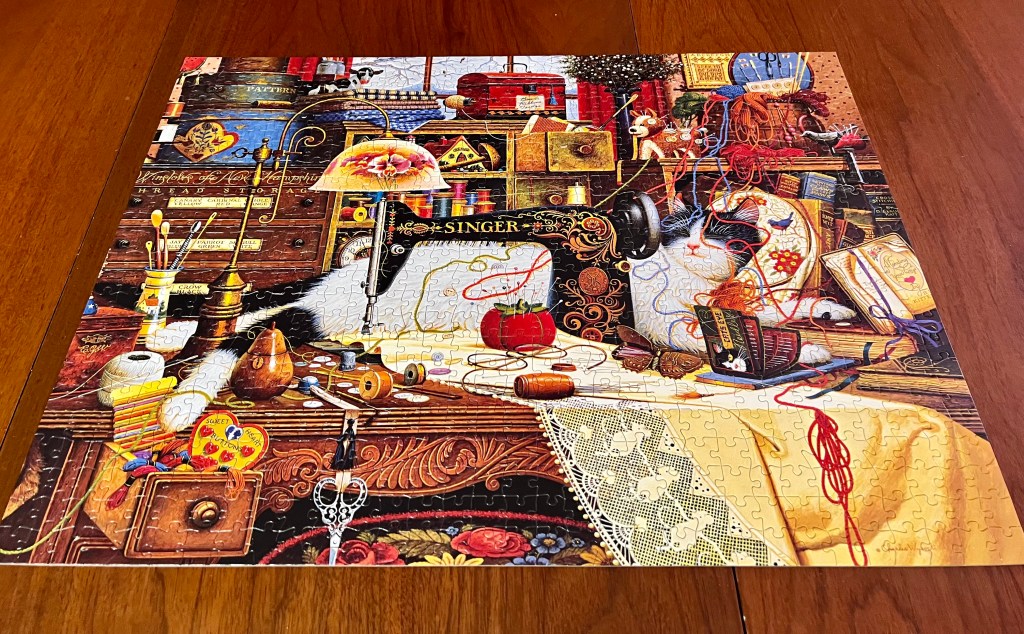
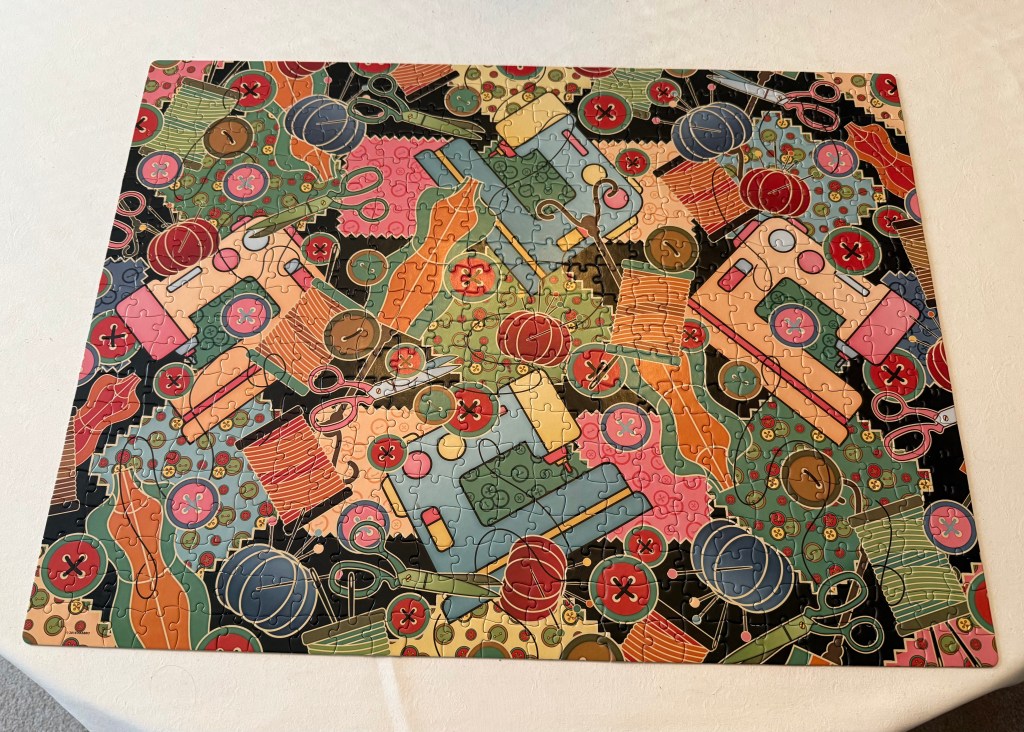
People have asked me what I do with a puzzle once I’ve finished it. I usually leave it together long enough to enjoy the completed picture, and I always take a photograph. Then I take it apart.
I keep very few puzzles—only my absolute favorites. Some go to our annual community garage sale, where they sell very well. I’ve given some to a neighbor who also loves puzzles, and I donate others so someone else can enjoy putting them together.
For me, the pleasure really is in the process. Once I’ve finished a puzzle and taken its photograph, I’m usually ready to start thinking about the next one.
One Piece at a Time
I suppose that is what keeps me starting another puzzle. There is always a new picture to study, another challenge to figure out, and that satisfying moment when a piece finally fits exactly where it belongs.
I may not keep most of the puzzles themselves, but I keep the photographs—and I certainly remember the ones I especially enjoyed.
For me, finishing the picture is satisfying.
But putting it together is the best part.


 A Cozy Creative Life
Leave a comment