I was too young to go to auctions with my grandparents, but I loved visiting their home, which was filled with antiques. One of my favorites was a very large brass cash register that sat on top of a piece of furniture. I played with it every time I visited.
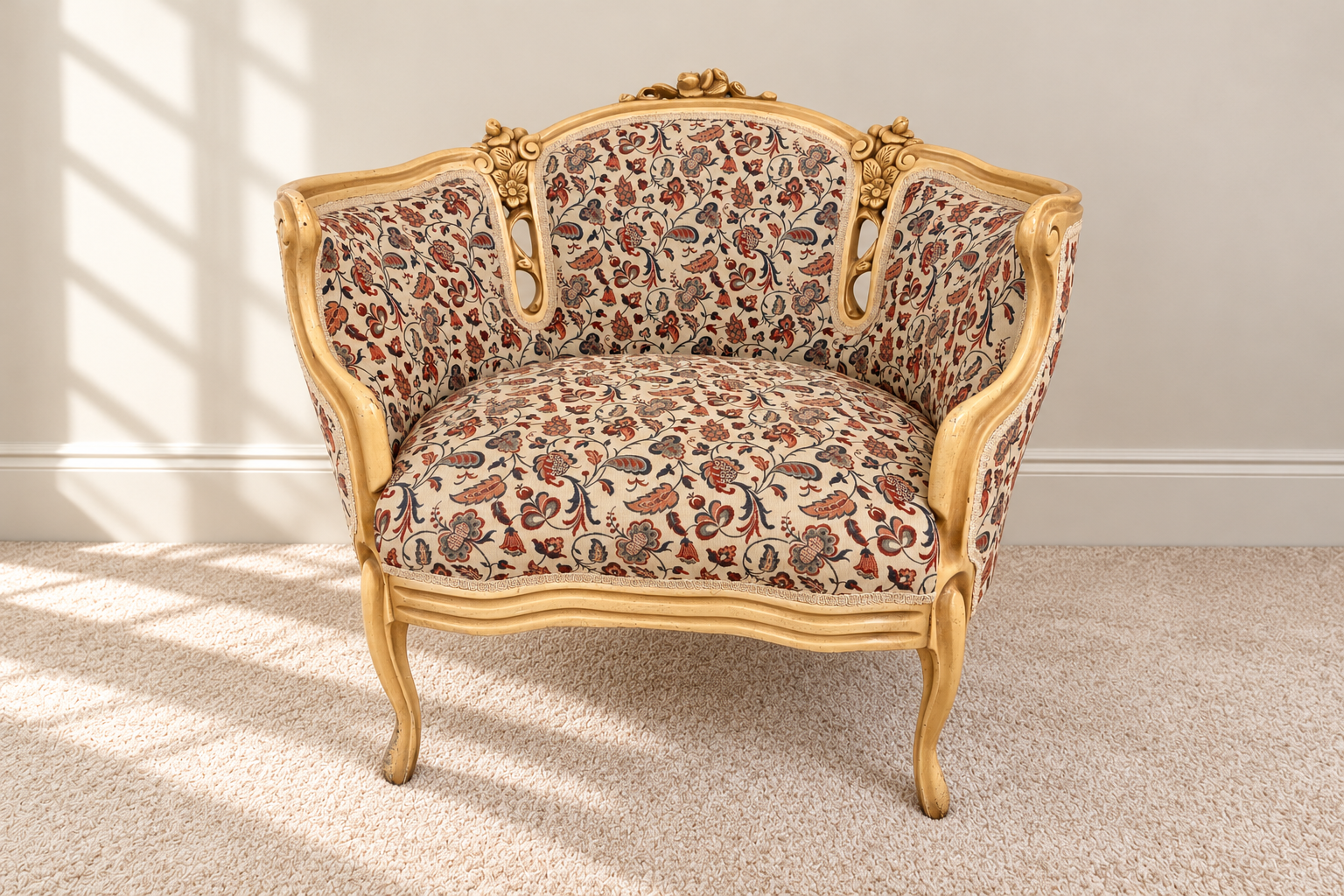
My grandmother liked to put a name on the pieces she wanted you to have. My name was on a beautiful barrel back chair, and she would say, “Someday, this will be yours.” I have that chair today. Maybe that’s where my love of auctions began.
I go often enough now that I’ve settled into a routine. If you’ve never bid before, here’s how I handle it.
Start with the preview
I usually go to the preview on Sunday. It lets me look over everything I’m interested in and decide whether I need to arrive early on auction day. Auctions follow an order of sale, so once I know where my items fall, I can guess about when they’ll come up.
If it’s your first auction, the preview is where you do your homework. Take photos of the items you like and write down the item number or the quad where each one sits. Make a list with the price you’re willing to pay for each, knowing it may change once the bidding starts. Pick up the printed list of auction items if they have one, so you can follow along. And if something is in a locked case, ask the staff to open it ahead of time so you can examine it closely.
Where to sit
I like to sit or stand in the back so I can see who I’m bidding against. If the back isn’t available, I take a seat on the far side of the room.
When you go often, you begin to recognize the regulars and what they collect. #41 buys sterling and gold. #15 goes for old crocks and collectible figurines. Knowing that helps me guess who might push the price up on a particular item. You can also bid online, but it’s harder to tell how far the bidding will go when you can’t see the room.
Bidding
I have my own permanent bidder’s number, and no, I’m not telling you what it is. All I do is raise my hand and the auctioneer knows who I am, so I never have to stop at the front office for a number. If you’re new, you’ll want to get there a little early to register.
I try to settle on a top price before I raise my hand, though I’ll admit it doesn’t always hold. Auctions move fast, and you have to make quick decisions. One thing that helps is not jumping in right away. Wait until the auctioneer comes down in price, or until someone else stops bidding, and then sneak in at the last minute. Once an item is sold, it’s sold, so be sure before you bid.
Don’t forget the buyer’s premium and sales tax
This one surprises a lot of first-timers. My auction charges a buyer’s premium, which is a percentage added on top of your winning bid, and it also charges sales tax. Both are added to your total, so figure them into your bid ahead of time. Check the premium rate before you go, because a bid that feels like a bargain can look different once everything is added up.
Bring cash
Cash is king at an auction. Many auctions give a discount for cash or a good check compared with a credit card. You’ll also need it for the food stand and drinks, and it helps when you’re negotiating with other buyers. Sometimes someone wins a big lot but only wants a few pieces, and you can work out a deal for the rest.
Getting your treasures home
After you win, a staff person brings the item to you. If it’s very fragile, or it’s a full set of dishes that would take too long to pack, you can ask them to put it back in the case and pick it up later. Boxes and paper are provided. If something is too big for your car, a friend with a truck can help, or the auction may be able to deliver it to your home.
The takeaway
Preview, plan, set your limit, and bring cash. You’ll have fun, and you might come home with something wonderful, maybe even something that becomes a family treasure.
If you’d like to see an auction of a different kind, I wrote about my trip to the plant auction.
Do you have a favorite auction find, or a piece with a story behind it? Tell me about it in the comments!



Leave a Reply